The Startup Branding Checklist: 12 Things to Get Right Before You Launch
When you are launching a startup, branding can feel like a luxury behind product, funding and hiring. In reality, it shapes how investors, customers and early hires understand what you are building. First impressions form quickly, and a start-up has less history to lean on.
This checklist covers what to settle before launch, in a sensible order. It is not a call to spend heavily. Most items cost time rather than money.
1. Know exactly who you are for
Define your first customers precisely: who they are, what they are struggling with and how they currently cope. Early branding aimed at everyone ends up speaking to nobody.
2. Write down your positioning
Capture who you serve, what you offer and why you are different. Our guide to writing a brand positioning statement provides a simple template. Keep it to one or two sentences.
3. Check the competitive landscape
List direct and indirect alternatives, including doing nothing. Note how each presents itself. The goal is to find the space you can own, not to copy someone else's.
4. Choose a name you can live with
A good start-up name is memorable, easy to say and spell, available as a domain and social handle, and free from obvious trademark conflicts. Test it with people outside your team. Our naming guide covers the process in depth.
5. Do basic trademark and domain checks
Search the UK Intellectual Property Office's trade mark register and the company register for similar names in your field, and secure the domain and key social handles. For anything significant, take legal advice before committing, since changing a name later is far more costly than checking early.
6. Define your personality and voice
Decide how the brand should feel and sound. Warm or authoritative? Playful or precise? Write a few examples of how you would phrase a headline, a support reply and an apology. Our tone of voice guide explains how.
7. Design a simple, flexible identity
You need a logo, a colour palette, one or two typefaces and a consistent approach to imagery. Aim for something that works at small sizes on a phone, and in black and white. Resist complexity that will be hard to reproduce.
8. Build a minimal brand kit
Collect your logo files, colours, fonts and example layouts in one place. Even a short document prevents the drift that appears when different people create materials. See what to include in brand guidelines.
9. Make the website say the right things
Your website is often the first and only proof of credibility. Check that:
- The headline explains what you do and for whom
- Proof is visible: customers, results, press, founders
- The next step is clear
- The design matches the positioning
Our article on whether your website reflects your brand gives a quick audit.
10. Prepare your founder story
People connect with people. Be ready with a short, honest account of why you started and what you believe. Use it consistently on your website, in pitches and in recruiting.
11. Set up the practical basics
- A professional email address on your own domain
- Consistent profiles on the channels your customers use
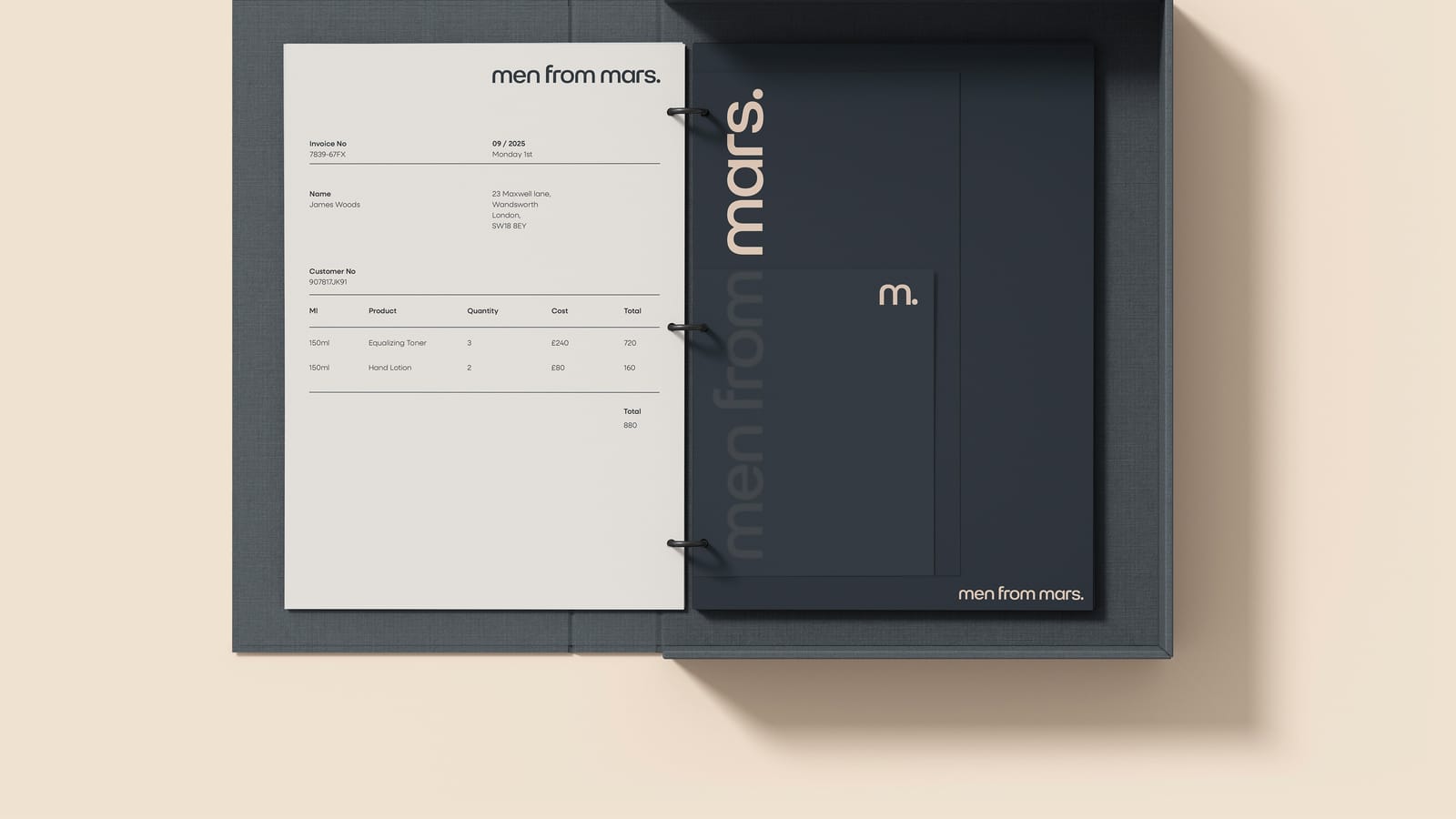
- Templates for decks, proposals and invoices
- A simple process for approving anything public
12. Decide how you will measure the brand
Pick a few indicators: direct traffic, branded search, inbound enquiries, quality of leads, customer descriptions of you. You will not be precise at first, but you will notice change.
What to do first
If time or budget is limited, prioritise in this order:
- Audience and positioning
- Name and basic checks
- Voice and website messaging
- Identity and brand kit
- Everything else
A modest identity built on a strong position beats a beautiful one with no clear message.
When to bring in help
Founders can do much of this alone, but outside support is worth considering when:
- You are raising investment and need to look credible
- The name or positioning is contested within the team
- You are entering a crowded category
- You lack time or design skills
We work with early-stage businesses at several levels, from a focused positioning and identity sprint to a full brand. See our approach to startup branding.
Frequently asked questions
How much should a startup spend on branding?
It depends on stage and goals. Start with the thinking, which is mostly free, and invest in design proportionate to your funding and market. Our piece on branding costs in the UK explains what drives price.
Should I rebrand later if I outgrow it?
Possibly, and that is normal. Build something flexible, avoid names that limit you, and expect to evolve.
Do I need a logo before launch?
You need something professional and consistent. It does not have to be perfect, but it should not undermine credibility.
Can I get advice before committing?
Yes. Book a free brand consultation and we will tell you honestly whether now is the right time to invest.